In the world of perfumery, a glass bottle is far more than a simple container. It represents the emotional value of fragrance, the identity of a brand, and the artistry of packaging design. Whether for luxury perfume houses, niche fragrance brands, or emerging private-label creators, a high-quality perfume bottle plays an essential role in elevating the product experience and shaping consumer perception.
Behind every beautiful perfume bottle lies a highly technical manufacturing system—including materials science, mold engineering, high-temperature processing, surface finishing, automation technology, and strict quality control. This article provides a comprehensive, in-depth look at the craftsmanship of perfume glass bottles and caps, covering raw materials, production processes, surface decoration, customization, quality inspection, and future industry trends.
This long-form guide is designed for fragrance brand owners, packaging buyers, wholesalers, designers, and anyone seeking to understand how premium perfume packaging is produced.
1. The Essence of Perfume Glass Bottles: Materials and Composition
1.1 What Makes Perfume Bottles Different from Ordinary Glassware?
Perfume bottles typically use high-flint (high-clarity) glass, which features:
Superior transparency and light refraction
Minimal impurities, achieving a crystal-clear appearance
High surface smoothness, suitable for luxury-grade finishing
Excellent strength and resistance to alcohol-based liquids
Compatibility with various decoration processes such as spraying, frosting, UV plating, hot stamping, and screen printing
Premium brands often select super-flint glass, which offers a brilliant, crystal-like clarity ideal for luxury positioning.
1.2 Common Glass Composition

A standard high-flint perfume bottle is made from:
Component Percentage
Silica (SiO₂) 72–75%
Soda Ash (Na₂CO₃) 10–15%
Limestone (CaCO₃) ~10%
Alumina, magnesium oxide Stabilizers
Cullet (recycled glass) 15–30%
High-quality perfume glass relies heavily on:
Strict impurity control
Stable furnace temperature
Uniform mixing
Even small variations can affect transparency, quality, or structural integrity.
2. From Sand to Bottle: The Complete Manufacturing Process of Perfume Glass Bottles
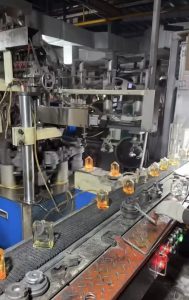
Producing a perfume bottle requires more than a dozen steps. Below is a detailed look into the full manufacturing process.
2.1 Raw Material Batching
Automatic batching systems precisely weigh silica, soda ash, limestone, and cullet before mixing them thoroughly.
Uniform blending is crucial for:
consistent clarity
stable furnace melting
reduced production defects
High-end factories use fully automated weighing and blending systems.
2.2 Melting (1,500–1,600°C)
The mixture enters a furnace heated to around 1500–1600°C, where it melts into a molten, viscous glass liquid.
The melting process takes 24–48 hours, allowing impurities to rise and be removed.
Melting quality directly affects:
bottle clarity
strength
color consistency
2.3 Gob Cutting (Molten Glass Droplets)
Molten glass flows into the feeder and is cut into precisely weighted lumps called gobs.
Accurate gob weight ensures:
uniform bottle wall thickness
stable shape
reduced defects
reliable mechanical strength
Automated systems monitor gob weight in real time.
2.4 Molding: Primary and Secondary Forming
Perfume bottles are shaped in two molding stages:
(1) Primary Mold (Blank Mold)
Creates:
The bottle neck
The initial cavity shape
Preliminary wall thickness
(2) Final Mold (Blow Mold)
Creates:
The final silhouette
Outer decorative curves
Smooth surfaces
Accurate bottle contours
High-end brands rely on CNC-machined steel molds to ensure precision and repeatability.
2.5 Annealing (Stress Removal)
Freshly formed bottles contain internal stress. Without annealing, they may:
crack with temperature changes
break under light pressure
suffer reduced durability
Bottles pass through an annealing lehr for 2–3 hours, gradually heating and cooling to stabilize the internal structure.
Annealing quality is one of the most important factors in determining long-term bottle reliability.
2.6 Automated Quality Inspection
Quality inspection includes:
visual check (bubbles, scratches, impurities)
surface smoothness
weight measurement
wall thickness testing
inner volume measurement
bottle bottom stability (anti-wobble test)
neck diameter precision
High-level factories use full automatic vision inspection for strict quality control.
3. Decorative Surface Finishing for Perfume Bottles
Perfume bottle finishing is what creates distinct brand identity and visual impact.
Below are the most common processes:
3.1 Spray Coloring
Allows effects such as:
gradient colors
translucent/transparent finishes
matte finishes
pearl or metallic sheen
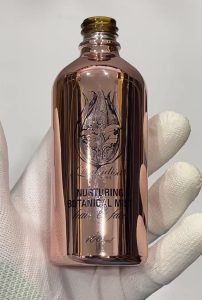
3.2 UV Plating (Metallic Shine)
Produces glossy metallic tones, including:
Gold
Silver
Rose gold
Gunmetal
UV plating is brighter than traditional spray coating and highly reflective.
3.3 Acid Frosting (Matte Frosted Glass)
Creates a soft, premium, satin-like surface feel.3.4 Hot Stamping
Gold foil or metallic foil transferred with high temperature and pressure.
Used for luxury branding.
3.5 Silk Screen Printing
Durable logos and text applied with high-viscosity ink.

3.6 Engraving / EmbossingCustom patterns carved into glass molds, producing tactile textures.
4. Perfume Bottle Caps: Materials, Structure & Craftsmanship
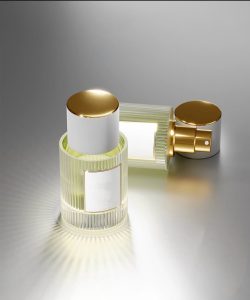
A perfume cap typically consists of:
Outer shell (design and aesthetics)
Inner plug (functional sealing component)
4.1 Outer Cap Materials
Material Features Market Position
ABS plastic Cost-effective, versatile Mass-market fragrances
Acrylic (PMMA) Crystal-clear, ideal for “diamond-cut” effects Mid–high-end
Zinc alloy metal Heavy, luxurious Luxury brands
Natural wood Eco-friendly, artisanal Niche & sustainable brands
Glass caps Premium, artistic Limited editions, niche perfumes
4.2 Inner Plug Materials
Type Features
PP Plug Flexible and universal
PCTA Plug Excellent alcohol resistance
PE Plug Cost-lower option
The inner plug determines:
tightness
leakage prevention
cap stability
It is the most functional part of the cap assembly.
4.3 Cap Surface Finishing
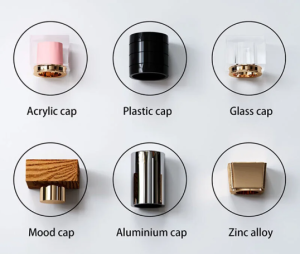
Caps can be decorated using:
Electroplating
Spraying
UV lacquer
Hot stamping
Brushed metal finishing
Two-color injection
Logo engraving
Matching the cap design with the bottle is crucial for brand aesthetics.
5. Perfume Spray Pumps: Design, Structure & Performance
A spray pump consists of:
actuator (pressing head)
nozzle
pump engine
spring
piston
dip tube
High-end perfumes use micro-mist pumps, offering:
ultra-fine spray
consistent output
smooth, controlled pressure
no leakage
The spray experience strongly influences perceived product quality.
6. Perfume Bottle Customization for Brands
A complete perfume packaging development project follows six stages:
6.1 Concept Design
Includes:
shape
brand mood
silhouette and curves
color direction
surface finishing
Unique bottle shapes amplify brand identity.
6.2 Technical Drawing (2D/3D)
Engineers provide:
bottle dimensions
filling volume
neck size (common: 13mm, 15mm, 18mm)
tolerance specifications
Accurate drawings ensure perfect compatibility between bottle, pump, and cap.
6.3 Sample Making
Options include:
3D printing samples (shape only)
mold samples (actual material)
decoration samples (test finishing)
Luxury brands may require multiple sample rounds.
6.4 Mold Manufacturing
Glass molds are made from hardened steel and CNC-machined.
Typical lead time: 20–30 days.
6.5 Mass Production
Large-scale manufacturing includes:
furnace calibration
production stability testing
random batch inspection
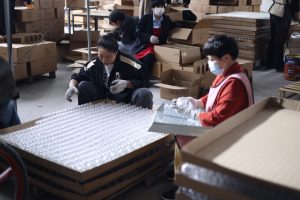
6.6 Packaging and Transportation
Because perfume bottles are fragile, packaging includes:
partitioned cartons
bubble wrapping
shock-absorption layers
pallet reinforcement
Logistics design significantly impacts breakage rates.
7. How to Evaluate Whether a Perfume Bottle Is “High Quality”?
A high-quality perfume bottle meets these criteria:
1. Excellent transparency and minimal impurities
No visible bubbles, stones, streaks, or black spots.
2. Uniform wall thickness
Ensures durability and a premium feel.
3. Stable bottom
The bottle stands firmly on flat surfaces.
4. Precise neck size
Guarantees perfect fit with pumps and caps.
5. Premium weight balance
A heavier feel often signals high-quality flint glass.
6. Smooth finishing with no color deviation
Decoration should be consistent and flawless.
8. Industry Trends: The Future of Perfume Glass Packaging (2025 & Beyond)
Trend 1 — Eco-Friendly Materials
Increasing demand for:
PCR recycled glass
water-based coatings
biodegradable pumps
wooden caps and minimalist packaging
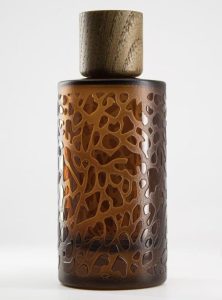
Trend 2 — Unique Custom Shapes
More brands differentiate through artistic bottle silhouettes.
Trend 3 — Automation & AI-Driven Quality Control
Using:
robotic assembly
automated vision inspection
smart production monitoring
Trend 4 — Flexible MOQs for Small Brands
The market is shifting toward small-batch customization.
9. Final Thoughts: Why Perfume Bottles Matter More Than Ever
A perfume bottle embodies the soul of a fragrance.
It represents:
Materials engineering
Industrial craftsmanship
Artistic design
Branding strategy
Consumer psychology
The right bottle not only protects the fragrance but elevates the entire product story.
If you are developing a new perfume product line or exploring packaging solutions, understanding these processes helps you make better choices—from design to sourcing to final production